
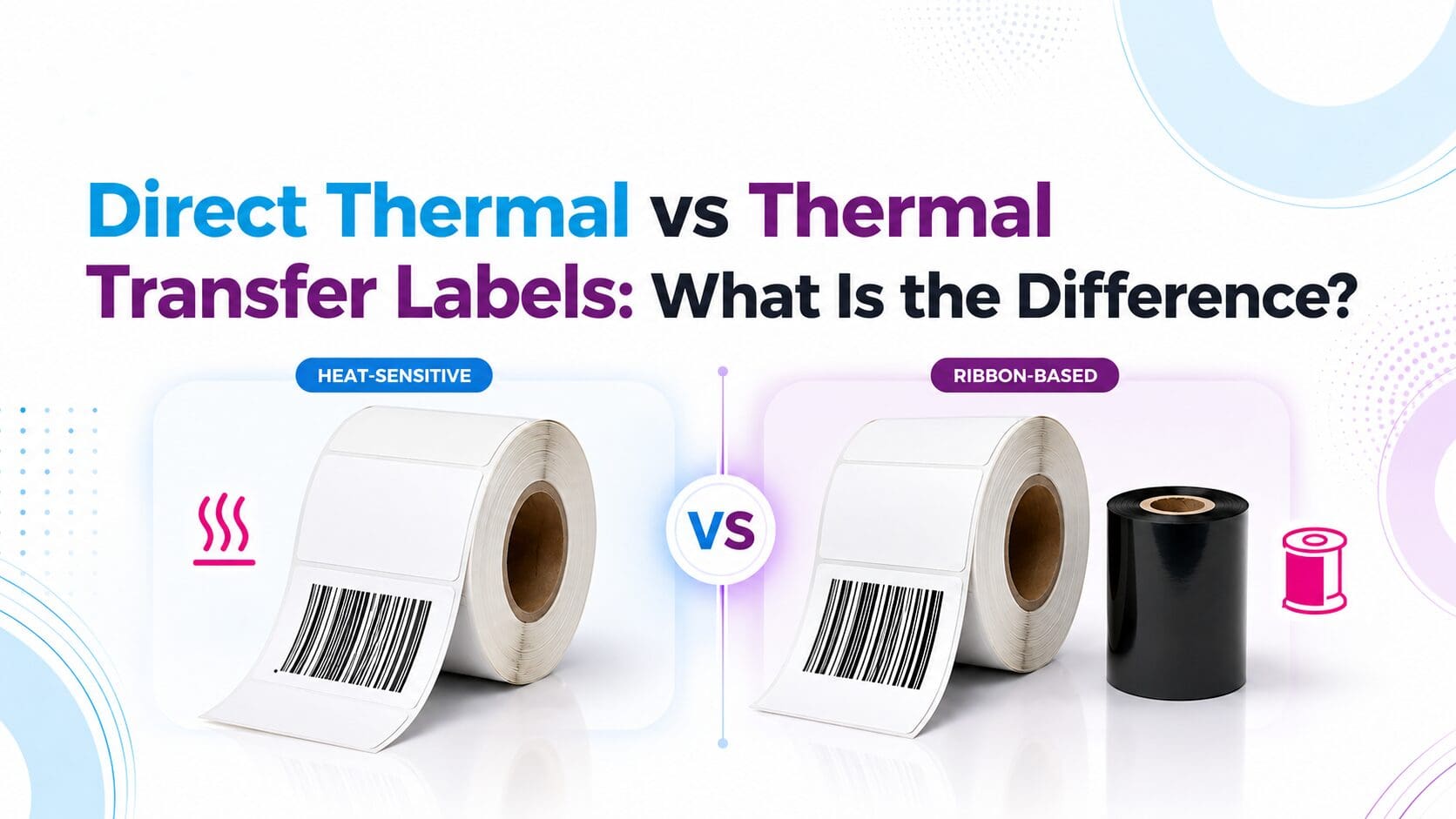
Direct thermal labels create an image when heat reacts with a special coating on the label. Thermal transfer labels use a heated printhead and ribbon to place ink onto the surface.
The right choice depends on how long the label must last, where it will be used and the printer you have.
For shipping labels and other short-term jobs, direct thermal printing is often the simpler option. For product labels, asset tracking and labels exposed to moisture or rubbing, thermal transfer printing is usually more suitable.
Direct Thermal and Thermal Transfer Labels Compared
| Feature |
Direct thermal |
Thermal transfer |
|---|---|---|
| How it prints | Heat reacts with the label coating | Heat transfers ink from a ribbon |
| Ribbon required | No | Yes |
| Expected use | Short-term labelling | Medium and long-term labelling |
| Material choice | Heat-sensitive paper and some synthetic materials | Paper, coated paper and synthetic materials |
| Resistance | More sensitive to heat, light and rubbing | Can resist moisture, heat, chemicals and rubbing |
| Common uses | Shipping, food rotation and temporary tracking | Products, assets, barcodes and compliance |
| Printer setup | Fewer supplies to load | Label and ribbon must be matched |
How Does Direct Thermal Printing Work?
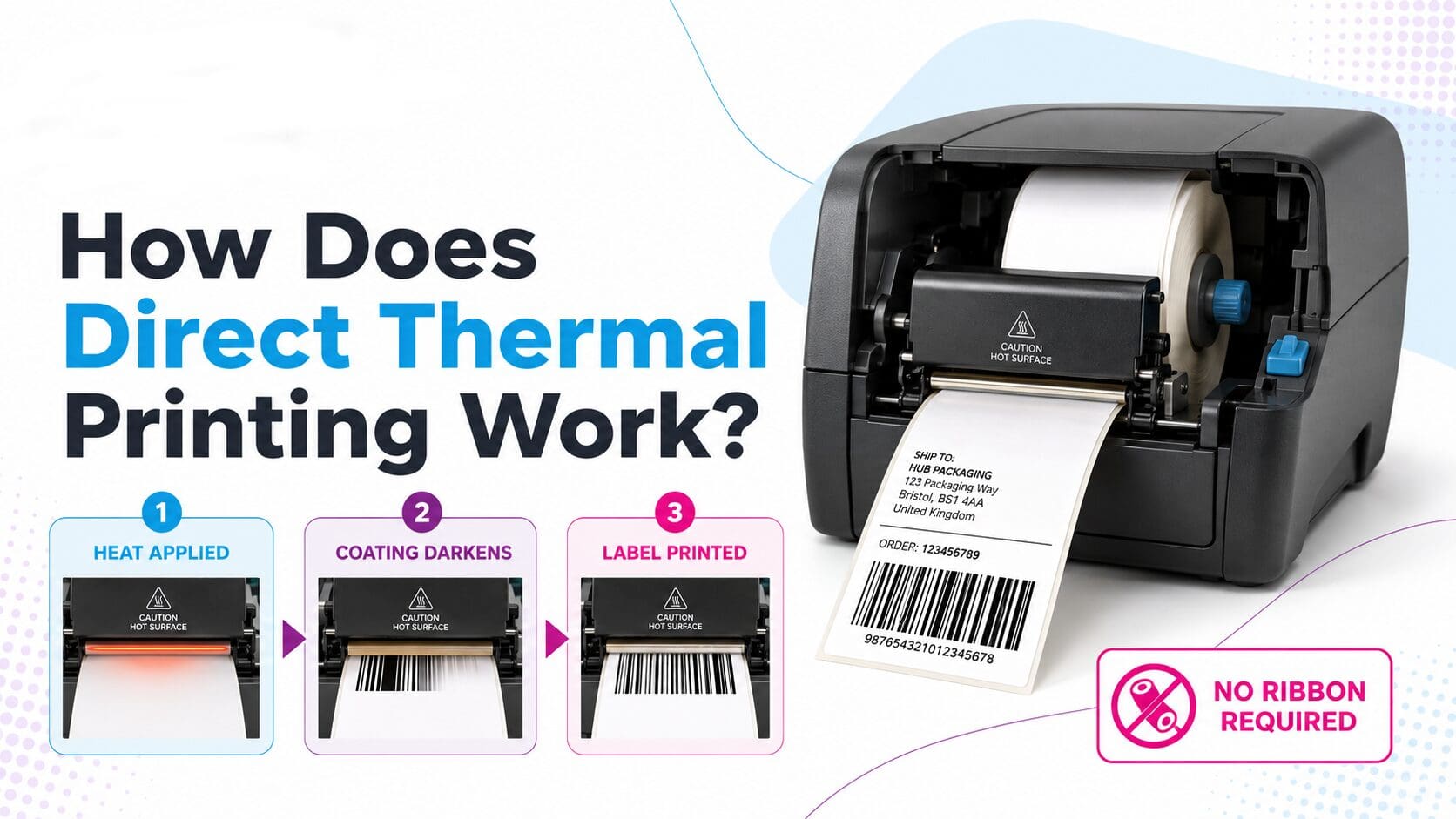
Direct thermal printing uses labels with a heat-sensitive coating. Small heating elements inside the printhead activate this coating and create the text, barcode or image.
No ink, toner or ribbon is needed. You only need the correct label roll and a compatible thermal label printer.
Main Features of Direct Thermal Labels
- No ribbon is needed
- Label changes are quick
- Fewer printing supplies need to be stored
- Text and barcodes can be clear and easy to scan
- Suitable for high-volume, short-life labels
- Available in standard and custom sizes
Common Uses
Direct thermal printing is often used for:
- Courier and shipping labels
- Warehouse picking labels
- Food rotation and date labels
- Retail receipts
- Event and visitor tickets
- Temporary product tracking
- Weigh scale labels
- Healthcare sample labels
These applications usually need the label to remain readable for days, weeks or a few months rather than several years.
What Are the Limitations?
The coating can react to heat, direct sunlight, friction and some chemicals. This may cause the label to fade, darken or become harder to scan.
A parcel label kept indoors for a short time may work well. A label left inside a hot vehicle, beside a window or outdoors could become damaged much faster.
Top-coated and synthetic direct thermal materials can provide extra protection. The conditions still need to be checked before choosing the label.
How Does Thermal Transfer Printing Work?
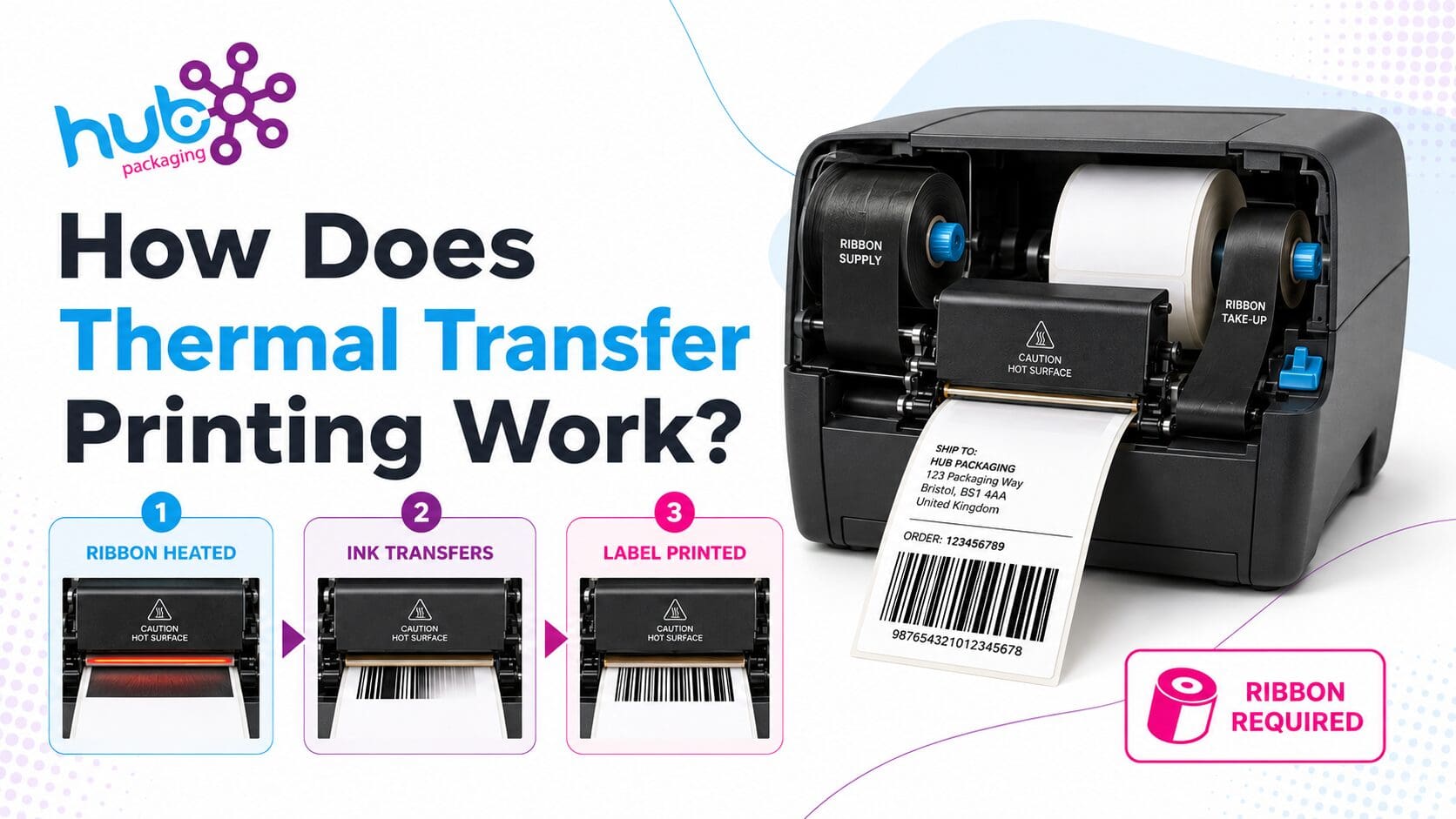
Thermal transfer printing uses a ribbon coated with wax, resin or a mix of both. The printhead heats the ribbon and transfers the ink onto the label.
This creates a more stable image that can remain readable for longer. It also allows you to print on a wider choice of materials.
How Does Thermal Transfer Printing Work?
- Clear text, graphics and barcode printing
- Better resistance to rubbing and moisture
- Suitable for paper and synthetic labels
- Longer expected print life
- Different ribbons can be used for different conditions
- Suitable for product, warehouse and industrial labelling
The label material and ribbon must be compatible. Using the wrong combination can cause light print, smudging or poor barcode scans.
Choosing a Thermal Transfer Ribbon
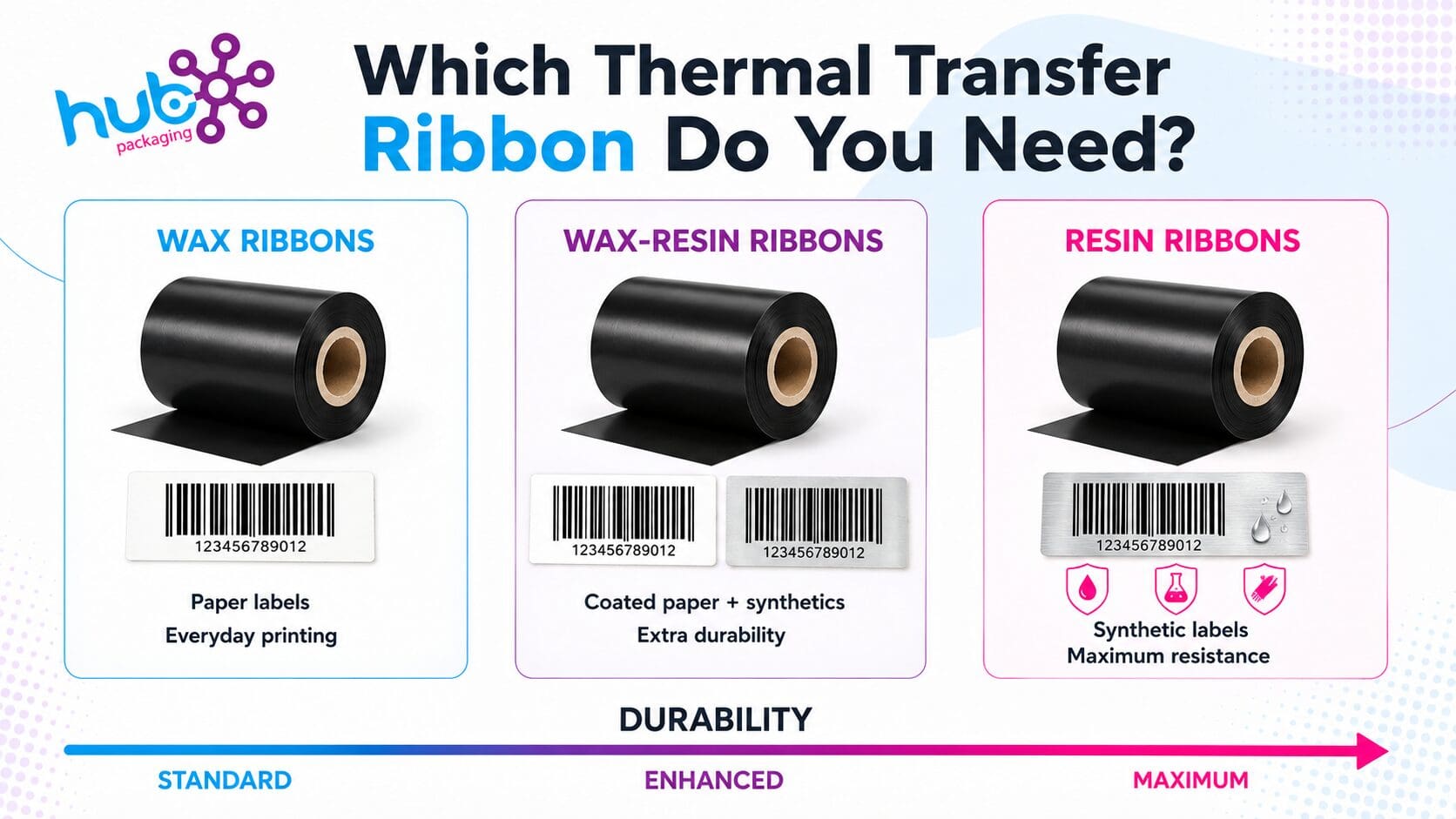
The ribbon affects how well the finished label performs. There are three main types.
Wax Ribbons
Wax ribbons are commonly used with paper labels. They are suitable for general indoor labelling where the print will not face heavy rubbing, moisture or chemicals.
Common uses include:
- Carton labels
- Retail labels
- Warehouse identification
- General barcode labels
Wax-Resin Ribbons
Wax-resin ribbons provide more resistance than standard wax. They can work with coated paper and some synthetic materials.
They are useful for:
- Product labels
- Stock control
- Healthcare labels
- Labels exposed to regular handling
- Chilled food packaging
Resin Ribbons
Resin ribbons are designed for synthetic label materials. They can provide stronger resistance to water, chemicals, heat and abrasion.
Typical uses include:
- Asset labels
- Outdoor equipment labels
- Chemical container labels
- Laboratory labels
- Automotive parts
- Electronics
- Long-term compliance labels
The best result comes from matching the ribbon to the label material, printer and working conditions.
How Can You Identify Your Label Type?
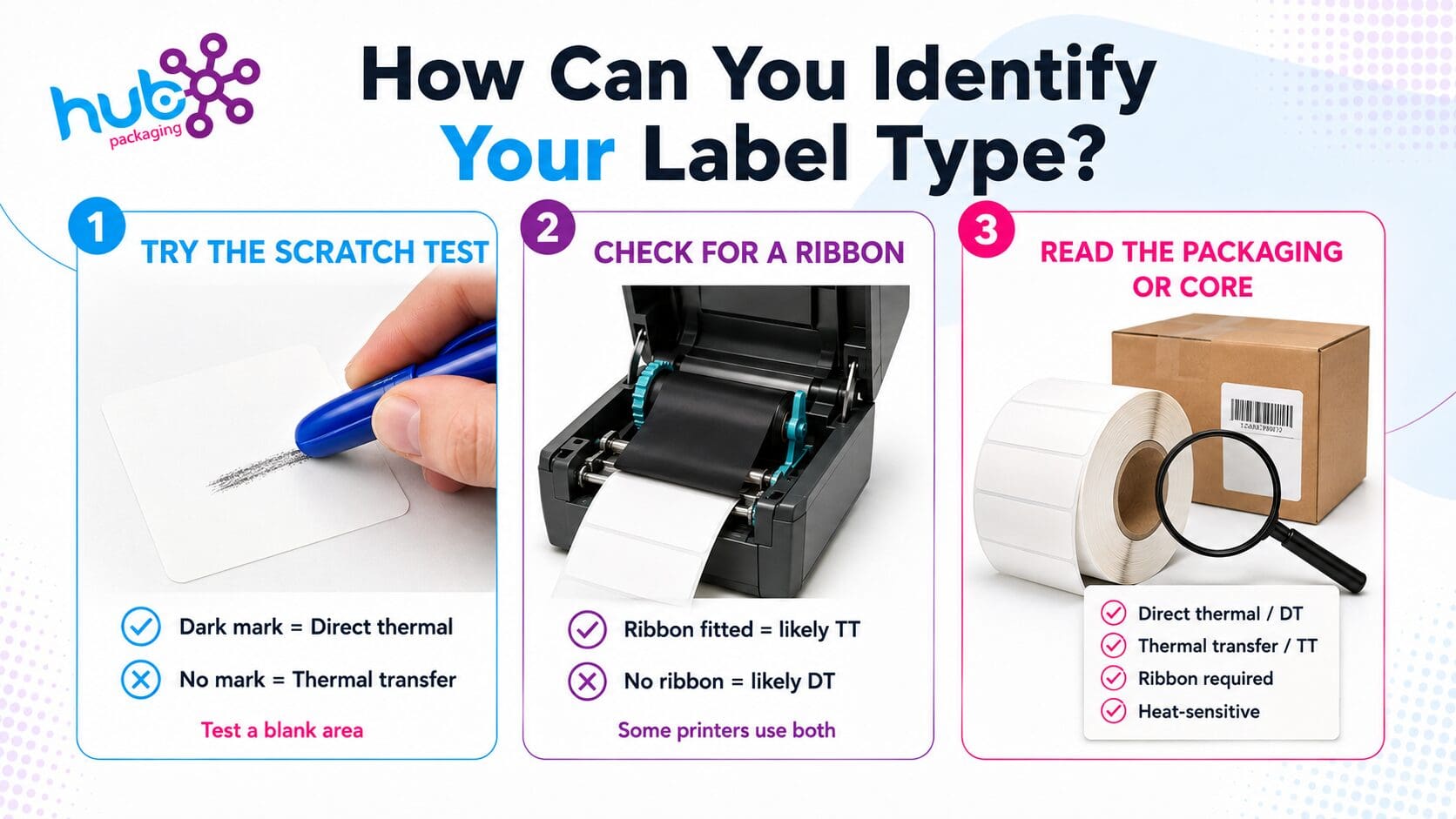
1. Try the Scratch Test
Place the label on a firm surface. Rub a blank area quickly and firmly with your fingernail or the rounded end of a pen cap.
- A dark line or black mark suggests it is a direct thermal label
- No dark mark suggests it is thermal transfer label stock
Test a blank area so you do not damage important printed information.
2. Check for a Ribbon
Look inside the printer.
If a ribbon is fitted between the printhead and the label roll, the printer may be using thermal transfer mode. A printer running without a ribbon may be set up for direct thermal printing.
Some thermal transfer printers can use both printing methods, so the printer setup alone may not confirm the label type.
3. Read the Packaging or Roll Core
The box, roll core or product label may include terms such as:
- Direct thermal
- DT
- Thermal transfer
- TT
- Ribbon required
- Heat-sensitive material
You may also find the label size, adhesive type, core diameter and winding direction.
Which Printing Method Should You Choose?
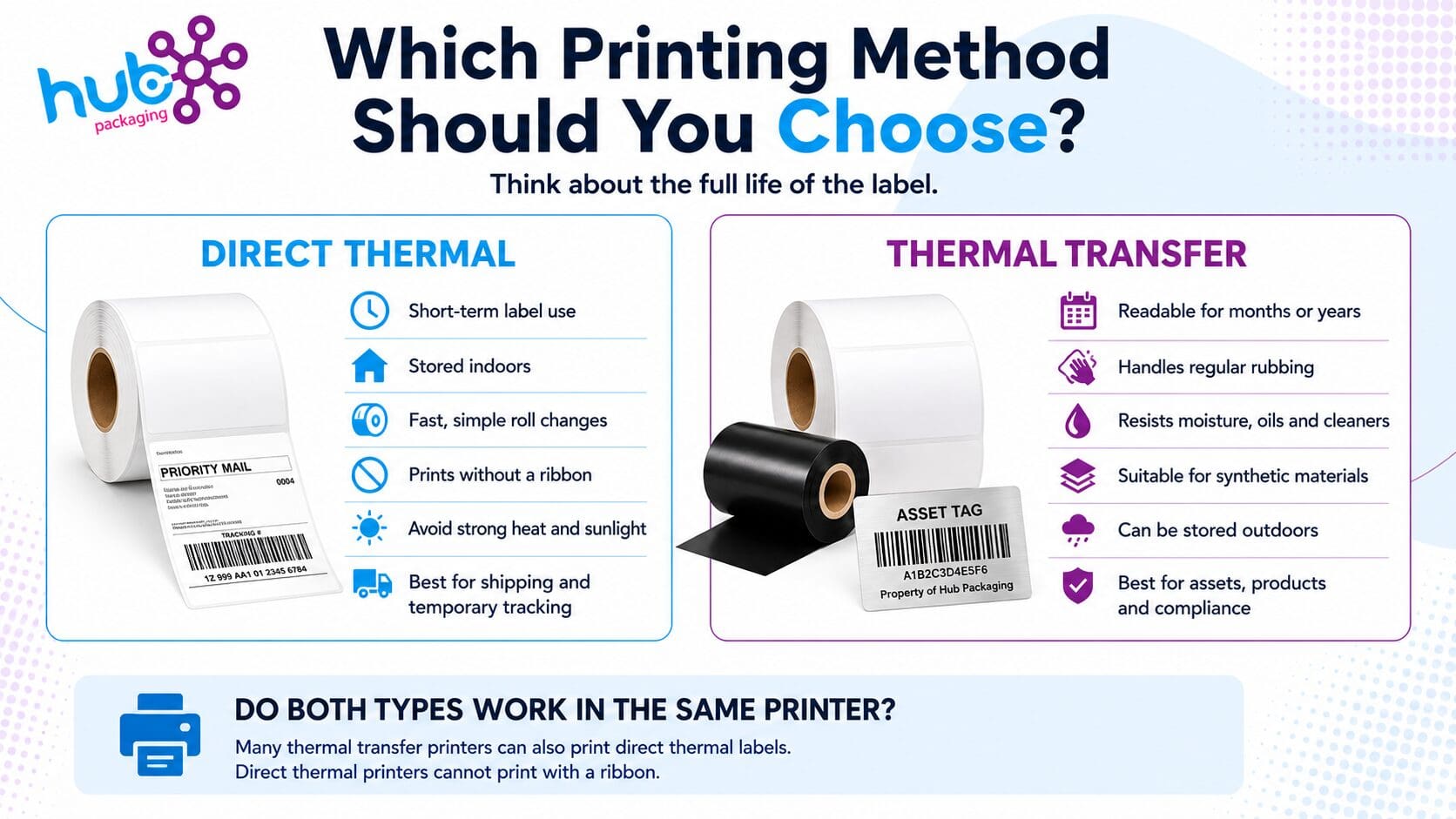
Start by thinking about the full life of the label.
Choose Direct Thermal Printing When:
- The label is only needed for a short time
- The label will be stored indoors
- Speed and simple roll changes are important
- You want to print without a ribbon
- The label will not face strong heat or sunlight
- You are printing shipping or temporary tracking labels
Choose Thermal Transfer Printing When:
- The label must remain readable for months or years
- The label will face regular handling or rubbing
- Moisture, oils or cleaning products may reach the label
- A synthetic material is required
- The product may be stored outdoors
- Long-term barcode scanning is important
- You need an asset, product or compliance label
Do Both Types Work in the Same Printer?
Many thermal transfer printers can also print direct thermal media. Direct thermal printers do not have the ribbon system needed for thermal transfer printing.
Before ordering labels, check:
- Printer make and model
- Supported print method
- Maximum label width
- Roll core diameter
- Maximum roll diameter
- Winding direction
- Gap, notch or black mark sensor
- Ribbon width and length
- Print resolution
A label may be the correct size but still fail to feed or sense properly if these details are wrong.
What Else Affects Label Performance?
The printing method is only one part of choosing a label. The face material and adhesive also need to suit the job.
Application Surface
Labels can behave differently on:
- Cardboard
- Glass
- Metal
- Plastic
- Curved containers
- Rough surfaces
- Painted equipment
Some plastics can be difficult to label, especially when the surface has low surface energy.
Temperature
Check the temperature when the label is applied and the temperature during storage.
A freezer label may need a special adhesive even when the printed image looks suitable. Labels applied to a cold or damp surface may not stick correctly unless they are designed for those conditions.
Moisture and Chemicals
Regular contact with water, cleaning products, oils or chemicals can damage standard paper labels.
A synthetic thermal transfer label with a matched ribbon is often a better option for these conditions.
Label Storage
Unused label rolls should be kept in a clean, dry place away from direct sunlight and strong heat. Poor storage can affect the coating, adhesive and print quality.
What Is the Cost Difference?
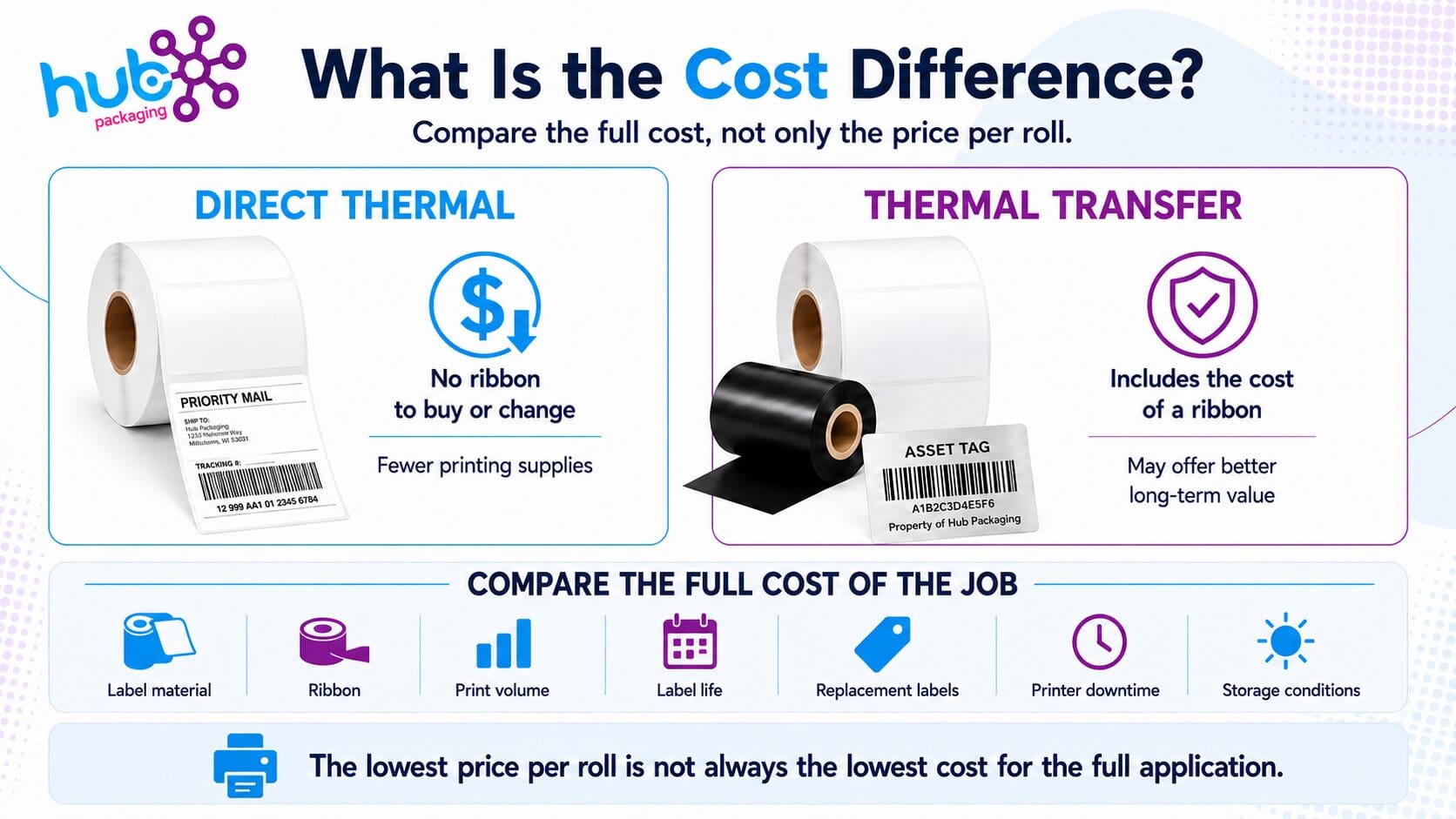
Direct thermal printing does not use a ribbon, which means there is one less printing supply to buy and change.
Thermal transfer printing includes the cost of a ribbon. It can still provide better value when a damaged or faded label would need to be replaced.
Compare the full cost of the job, including:
- Label material
- Ribbon
- Print volume
- Label life
- Replacement labels
- Printer downtime
- Storage conditions
The lowest price per roll is not always the lowest cost for the full application.
Struggling to Find the Right Packaging Solution?
Let Hub Packaging help you find the right solution. Our dedicated customer service team is here to support you!
📞+44 (0)28 4175 4977
📧 sales@hub-packaging.com
🌐 https://www.hub-packaging.com
We’re here to make packaging work better for your business.