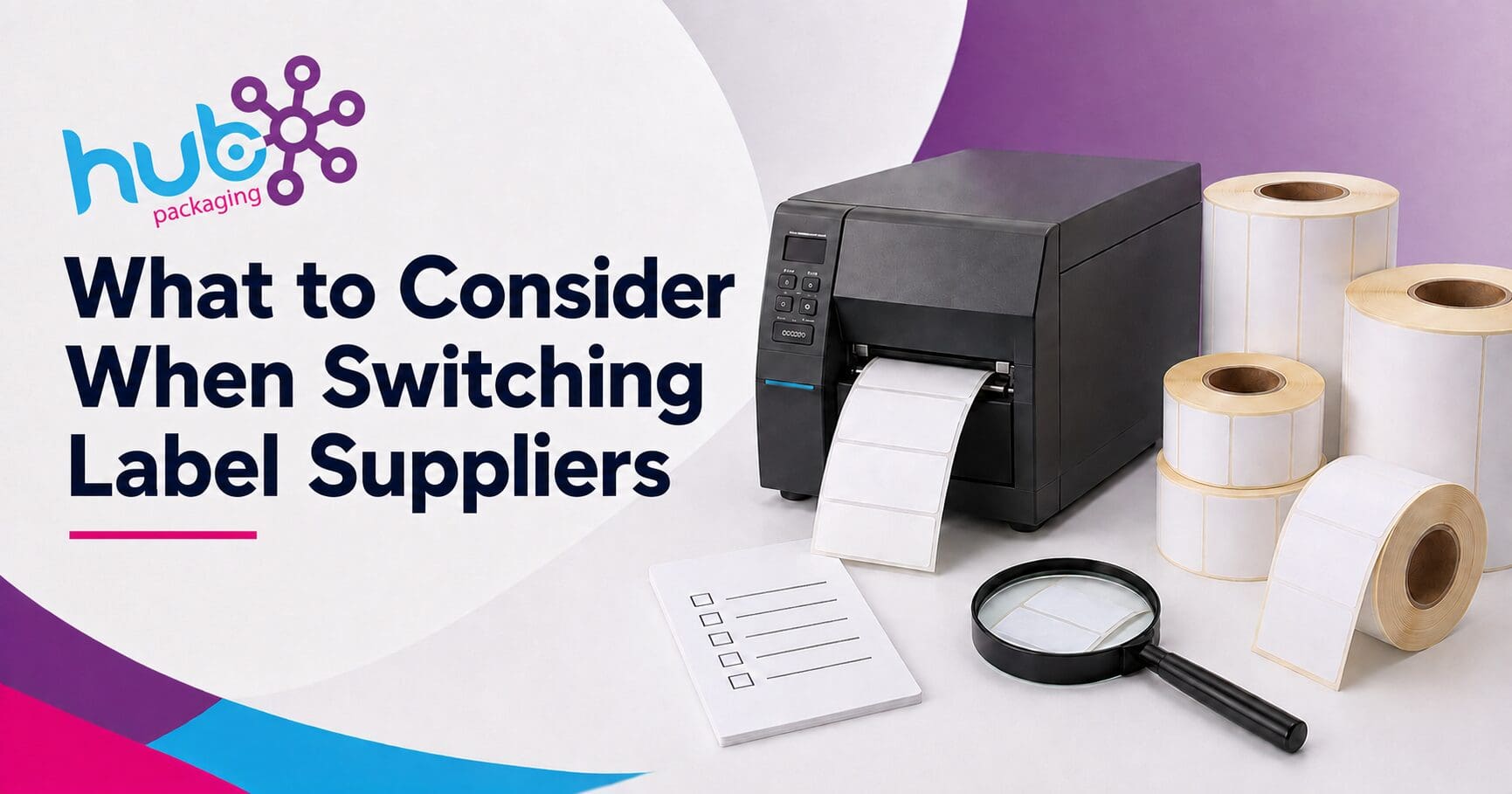
What to Consider When Switching Label Suppliers

Table of Contents

Switching label suppliers is about more than finding a lower price. Your labels must fit your printer, stick to the correct surface and remain readable in the conditions where they are used.

Lead times, minimum order quantities, material quality and technical support can also affect your daily operation. Before making a change, check the full cost per label, request samples and test them using your own printers, products and working environment.

This guide explains the key checks to make so you can avoid printing problems, delayed orders and wasted stock.

How to Choose the Right Label Supplier
Selecting the right supplier supports smooth operations, steady costs, and long‑term growth. The points below highlight what businesses should focus on when reviewing options or planning a supplier change.

Start with the Label Application

Before looking at materials, adhesives or finishes, explain what the label needs to do. A shipping label used for a few days has very different requirements from a product label stored in a freezer for several months.

Provide details about:

  • The product, box or container being labelled
  • How long the label needs to remain in place
  • Indoor or outdoor use
  • Exposure to cold, heat, water or chemicals
  • Manual or automatic application
  • The printer make and model
  • The number of labels required

A clear application brief helps reduce the risk of labels peeling, fading, jamming or becoming difficult to scan.

How Long Do the Labels Need to Last?

Label life can range from a few hours to several years.

Short-life labels are often used for parcels, receipts, warehouse picking and temporary identification. Long-life labels may be used for products, equipment, pallets, assets or safety information.

The expected lifespan will influence:

  • Adhesive strength
  • Label material
  • Print method
  • Ribbon grade
  • Protective finish
  • Resistance to fading or damage

Direct thermal labels are commonly used for short-term applications. Thermal transfer printing is often more suitable when the printed information needs to remain clear for longer.

What Printer Label Do You Need?

Label Adhesives

Permanent Adhesive Labels: Features and Uses

Permanent adhesive labels are designed to form a strong, lasting bond with the surface beneath them. They are a practical choice for products, parcels and equipment that need to stay clearly identified.

Key Features

  • Strong initial grip
  • Reliable long-term adhesion
  • Suitable for cardboard, plastic, glass and metal
  • Available in paper and synthetic materials
  • Compatible with direct thermal and thermal transfer printing
  • Can support barcodes, product details and tracking information

Common Applications

These labels are often used for shipping cartons, warehouse stock, product identification, asset tracking and retail packaging.

For the best result, apply the label to a clean, dry surface. Check the temperature, surface texture and expected label lifespan before ordering. Permanent adhesive labels may damage packaging or leave residue when removed, so they are not suitable for reusable containers or temporary pricing.

Removable Adhesive Labels: Features and Uses

Removable adhesive labels are designed to stay in place during use and peel away cleanly when no longer needed. They are useful for short-term identification without leaving heavy residue or damaging the surface.

Key Features

  • Clean and easy removal

  • Lower-tack adhesive

  • Reduced risk of sticky residue

  • Suitable for many smooth surfaces

  • Available in paper and synthetic materials

  • Compatible with printed barcodes and product information

Common Applications

These labels are often used for temporary pricing, promotional offers, reusable packaging, storage containers and short-term product identification.

Always test removable adhesive labels on the intended surface before placing a full order. Adhesion can change depending on temperature, moisture, surface texture and how long the label remains attached. They may not perform well on rough, dusty or heavily curved surfaces without a specialist adhesive.

Freezer Adhesive Labels: Features and Uses

Freezer adhesive labels are made to stay attached in cold, damp and frozen conditions. Their specialist adhesive can bond more reliably than a standard label when applied to chilled packaging or suitable frozen surfaces.

Key Features

  • Strong grip at low temperatures

  • Better resistance to condensation and moisture

  • Suitable for chilled and frozen storage

  • Available in paper and synthetic materials

  • Supports barcodes, batch details and expiry dates

  • Compatible with direct thermal and thermal transfer printing

Common Applications

These labels are often used for frozen food, chilled products, cold storage, food distribution and temperature-controlled deliveries.

Check the minimum application temperature before ordering freezer adhesive labels. A label applied at room temperature and then frozen may need a different adhesive from one applied directly to cold or frosted packaging. Always test the label on the intended surface and under normal working conditions.

Wash-Off Labels: Features and Uses

Wash-off labels stay attached during normal use but can be removed during a suitable washing process. The adhesive releases when exposed to warm water and the correct cleaning conditions, helping reduce manual scraping and sticky residue.

Key Features

  • Designed for easier label removal

  • Releases during warm-water washing

  • Reduces adhesive residue

  • Supports container reuse

  • Available with printed product or tracking details

  • Suitable for selected glass and plastic surfaces

Common Applications

These labels are often used on returnable bottles, jars, crates, food containers and reusable packaging.

Washing temperature, water pressure, detergent and wash time can all affect performance. Wash-off labels should be tested with the customer’s usual cleaning process before ordering. They are not the same as removable labels, as they are designed to release during washing rather than peel away by hand.

What Conditions Will the Label Face?

Think about the environment where your printer labels will be applied, stored and used. Temperature, moisture, UV light, chemicals, grease and handling can all affect adhesion and print quality.

Standard paper labels may suit clean, dry indoor areas. Chilled or frozen products may need freezer-grade adhesive, while outdoor or industrial applications may require a synthetic material with better resistance to water, sunlight and abrasion.

Also check the temperature when the label is first applied. A label fitted to a warm, dry box may perform differently from one applied directly to cold, damp or frozen packaging.

Testing the label under normal working conditions is the safest way to check that it will remain attached and readable for the required lifespan.

Consider Label Finishes

Give your printed labels the right look, feel and level of protection. Choose from gloss and matt laminations, varnishes, UV coatings, Spot UV and embossing.

Our range of label finishes can help protect printed artwork from handling, scuffs, moisture and everyday wear. They can also add shine, reduce glare or create raised details that customers can see and feel.

Gloss lamination adds a thin, clear film across the printed surface. Its smooth and reflective appearance makes colours look brighter and gives images greater contrast.

The film also creates a protective barrier between the print and the outside environment. This makes gloss laminated labels useful for products that may face frequent handling, splashes or rubbing during transport and display.

Key Features

  • Bright, shiny surface
  • Makes colours appear stronger
  • Adds protection against scuffs and light moisture
  • Easy to wipe clean
  • Suitable for detailed images and colourful designs
  • Helps printed labels stay clear during regular handling

Gloss lamination is often used on food packaging, drinks, cosmetics, cleaning products and retail goods.

Matt lamination uses a clear film with a smooth, low-shine surface. It softens reflections and gives labels a clean, modern appearance.

The reduced glare can make small text easier to read under bright shop or warehouse lighting. It also provides added protection against scratching, moisture and repeated handling.

Key Features

  • Smooth, non-reflective appearance
  • Reduces glare on printed information
  • Creates softer colours and contrast
  • Helps protect against scuffs and splashes
  • Comfortable, smooth feel
  • Works well with simple or detailed artwork

Matt laminated labels suit cosmetics, candles, drinks, health products and packaging with a simple design.

Gloss varnish is a clear liquid coating applied over the printed label. It creates a bright sheen without adding a separate plastic film.

This finish improves colour depth and gives the surface some protection from smudges, light rubbing and everyday handling. It is a practical choice when you want shine with a lighter coating.

Key Features

  • Clear, glossy coating
  • Brings out colour and printed detail
  • Offers light protection against rubbing and marks
  • Thinner than film lamination
  • Can cover the full label or selected areas
  • Suitable for many paper and synthetic materials

Gloss varnished labels are a good match for bottles, jars, boxes, promotional products and general retail packaging.

Matt varnish adds a clear, low-shine coating to the printed surface. It reduces reflections while keeping the natural feel of the label material more visible than a film laminate.

It can make packaging look neat and understated while offering some resistance to light scuffs and handling marks.

Key Features

  • Low-glare surface
  • Smooth, subtle appearance
  • Helps printed text remain easy to read
  • Provides light protection against scuffs
  • Keeps more of the original material feel
  • Can be applied across the label or to selected details

Matt varnish works well for food, drink, skincare, candles and products using natural-looking packaging.

UV coating is a clear liquid layer that is cured using ultraviolet light during production. The fast curing process creates a hard, smooth surface with strong shine and clear colour.

The coating helps guard printed artwork against scratches, smudges and moisture. It is useful for labels that need a clean, polished surface and added protection during handling.

Key Features

  • High-gloss appearance
  • Hard, smooth coating
  • Makes colours look rich and clear
  • Helps resist scratches and smudges
  • Adds some protection against moisture
  • Suitable for bold images and colourful artwork

UV-coated labels can be used on retail packaging, drinks, health products, cosmetics and household goods.

Embossing presses a design into the label material to create a raised surface. The effect can be added to lettering, borders, patterns or selected artwork.

The raised detail changes as light moves across the label. It also gives customers something they can feel, helping key parts of the design stand out without relying on extra colour.

Key Features

  • Creates raised text, patterns or graphics
  • Adds a clear tactile effect
  • Highlights selected parts of the design
  • Works well with simple artwork
  • Can be combined with varnish or other compatible finishes
  • Suitable for decorative and high-value product labels

Embossed labels are often used for wine, spirits, cosmetics, candles, gifts and specialist food products.

Lamination adds a separate film over the printed label. It normally offers stronger protection against moisture, rubbing and repeated handling.

Varnish is a liquid coating applied directly to the print. It is thinner and keeps more of the original label material’s texture. It provides useful surface protection without the heavier feel of a laminate.

The right option depends on the label material, product surface, storage conditions and expected level of handling.

Think about where the label will be used and what it may face during its life. Consider moisture, refrigeration, oils, cleaning products, sunlight, rubbing and frequent handling.

You should also check:

  • The label material
  • The product or container surface
  • Indoor or outdoor use
  • Expected label lifespan
  • Exposure to water, oils or chemicals
  • Printer and ribbon compatibility
  • Manual or automatic application
  • Required finish and texture

Some coatings and laminates can affect later printing with a thermal transfer printer. Test the complete label and ribbon combination before placing a larger order.

We can help match your artwork, material and application with suitable label finishes. Share your label size, material, product use, expected conditions and required quantity to get an accurate recommendation and quotation.

Testing Samples

We supply short test runs before full production. These samples let you check print quality, colours, layout, barcodes and data accuracy. It helps spot issues early and reduces delays later.

Physical samples can be posted, or we can share clear proofs for quick approval.

Understanding Lead Times for Production

Lead times are clear and realistic. Small batches are usually turned around quickly once artwork is approved.

Larger or more detailed jobs take longer due to setup and checks. If you have a deadline, we plan production to fit it and keep you updated at each stage.

Consistency Issues

Reliable output matters more than volume. Consistent materials, coatings, and adhesives help avoid scanning errors and reprints. Strong quality checks ensure every batch performs the same, which supports label quality across production and packing lines.

Custom Labels and Supplier Capability

Custom labels require extra attention during supplier selection. Size, shape, adhesive type, and print finish must match both the product and the environment it moves through. A capable supplier offers guidance on materials, compliance requirements, and printer settings to ensure custom labels perform consistently from production to delivery.

Managing custom labels also relies on accurate specifications and repeatability. Colour matching, layout control, and version tracking prevent errors and reprints. Suppliers with strong quality systems and clear approval processes help maintain label quality while reducing waste and manual rework.

How Hub Packaging Can Help

Our packaging audit helps you choose the right materials for your products and how they move through your business. We look at how items are packed, stored and shipped, then recommend options that fit your daily use. This includes advice on label materials, adhesives and print methods.

Struggling to Find the Right Packaging Solution?

Let Hub Packaging help you find the right solution. Our dedicated customer service team is here to support you!

📞+44 (0)28 4175 4977
📧 sales@hub-packaging.com
🌐 https://www.hub-packaging.com

We’re here to make packaging work better for your business.

Item added to cart.
0 items - £0.00