Use this quick guide to share the right details and get labels that fit your operation. Clear information at the start helps avoid delays and rework.
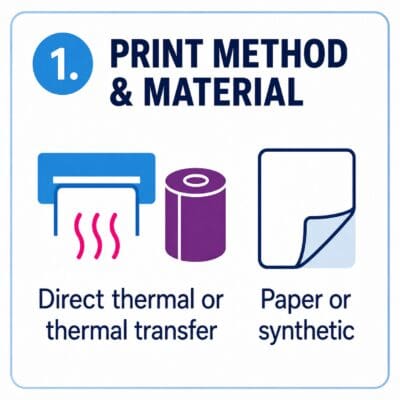
Step 1: Print Method and Label Material
Choose how the label is printed and what it is made from. Common options include direct thermal or thermal transfer, paired with paper or synthetic materials. This sets the base for print life and use.
Step 2: Adhesive Type
Adhesive choice depends on the surface. Popular options include permanent or removable. This affects how well labels stick to cartons, plastics or metals during handling.
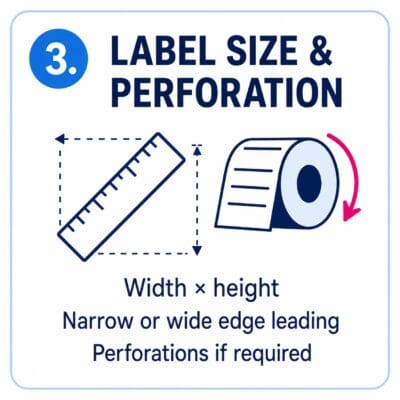
Step 3: Label Size and Perforation
Confirm the label size and how it feeds through the printer. Note narrow edge leading or wide edge leading. State if perforations are needed for easy tear off.
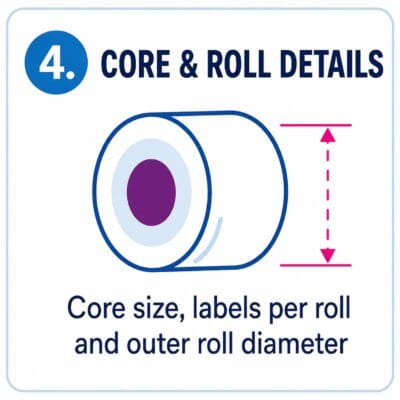
Step 4: Core Size and Roll Details
Share core size, number of labels per roll and outer roll diameter. These details help match the label roll to your printer and working space.
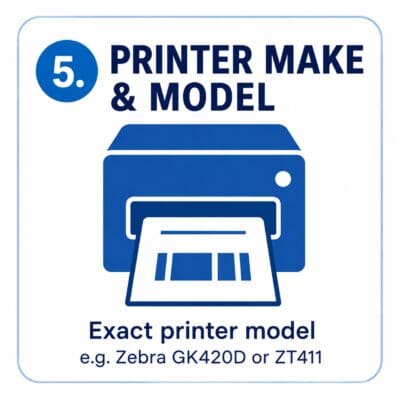
Step 5: Printer Make and Model
List the exact printer model, for example Zebra GK420D or ZT411. This ensures full compatibility and smooth label printing.
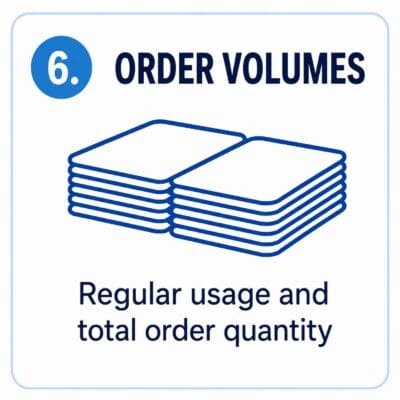
Step 6: Order Volumes
Order volume affects production planning and supply. Regular usage levels help keep stock consistent and costs controlled.
Not sure what you need? How Hub Packaging Can Help:
Our packaging audit helps you choose the right materials for your products and how they move through your business. We look at how items are packed, stored and shipped, then recommend
Struggling to Find the Right Packaging Solution?
Let Hub Packaging help you find the right solution. Our dedicated customer service team is here to support you!